Who Is Qualified to Teach CLT?
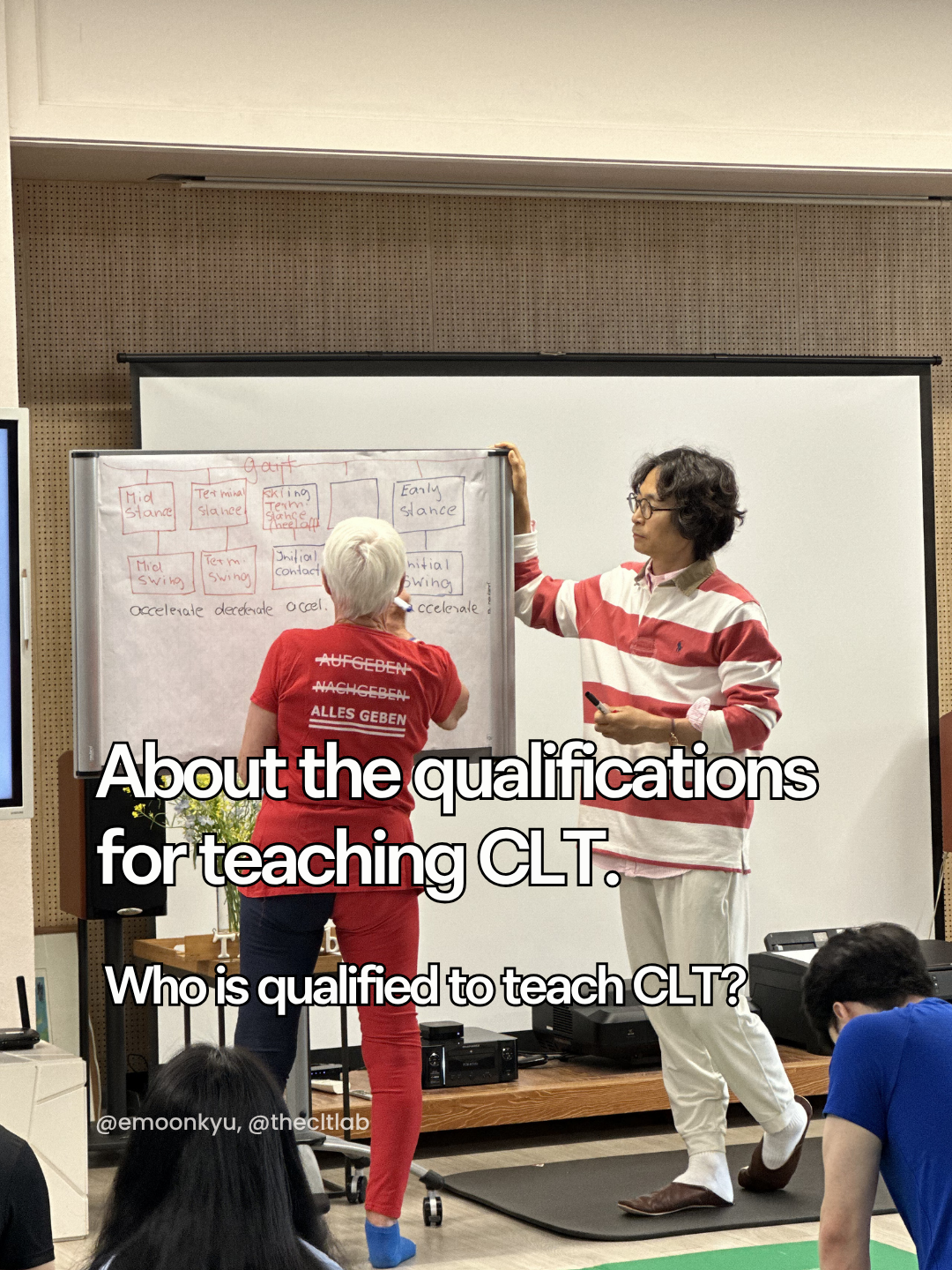
As more and more people learn CLT, one question naturally arises.
“Can I teach CLT?”
At first glance, this may seem like a simple question. However, it is an important one. CLT is not merely a collection of exercise patterns or movement techniques. It is an educational system that includes a concept of human locomotion, clinical reasoning, practical procedures, and a specific way of teaching movement. Therefore, the answer to this question must be clear.
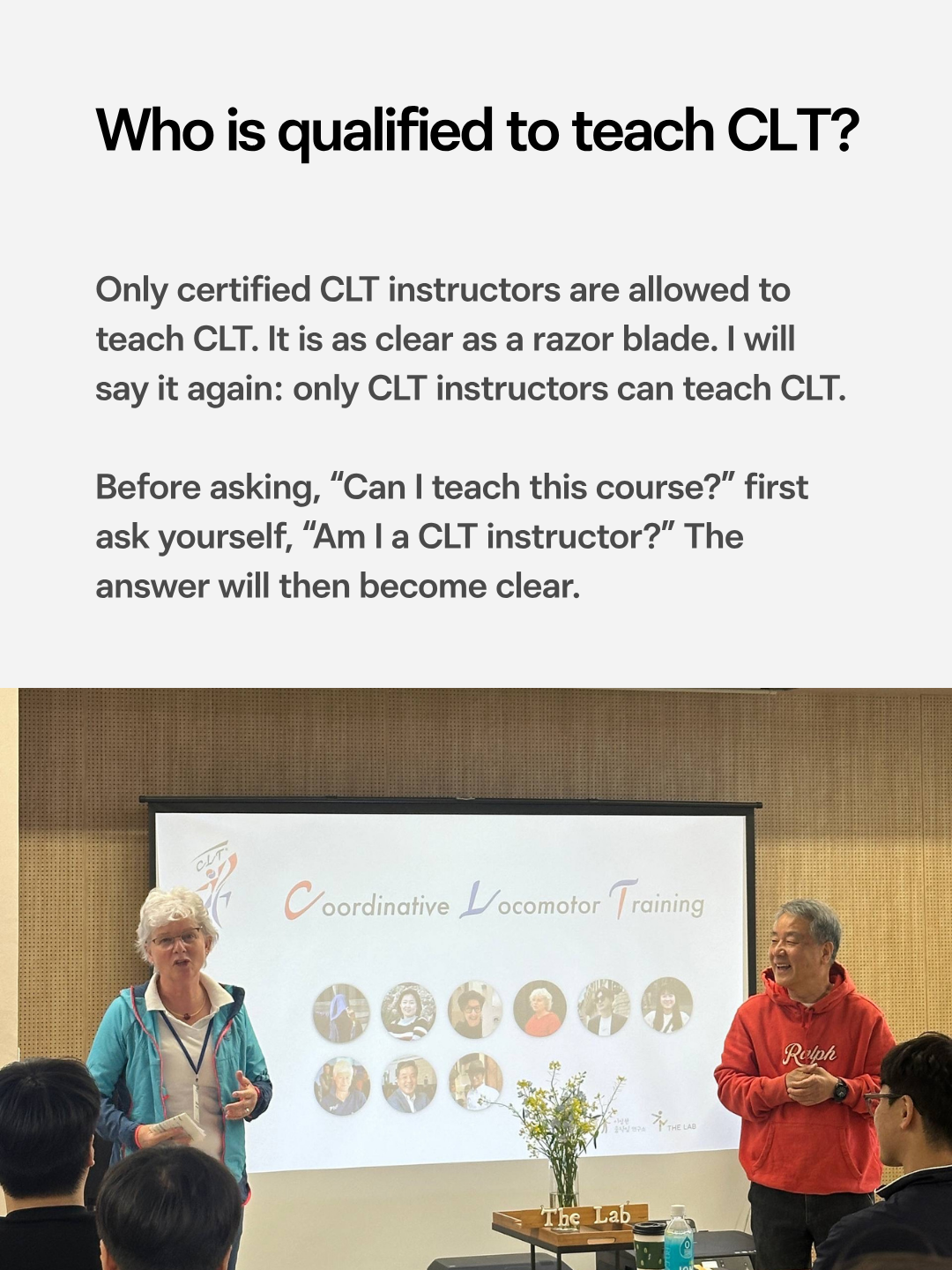
Only certified CLT instructors are qualified to teach CLT independently.
The Qualification to Teach CLT
Only certified CLT instructors are allowed to teach CLT. This principle is very clear. Before asking, “Can I teach this course?” one should first ask: “Am I a certified CLT instructor?”
The answer to that question makes everything clear. Completing a CLT course does not automatically qualify someone to teach CLT. A CLT course certificate is a certificate of course completion. It is not an instructor certification. These two things must be clearly distinguished.
Becoming a CLT Instructor
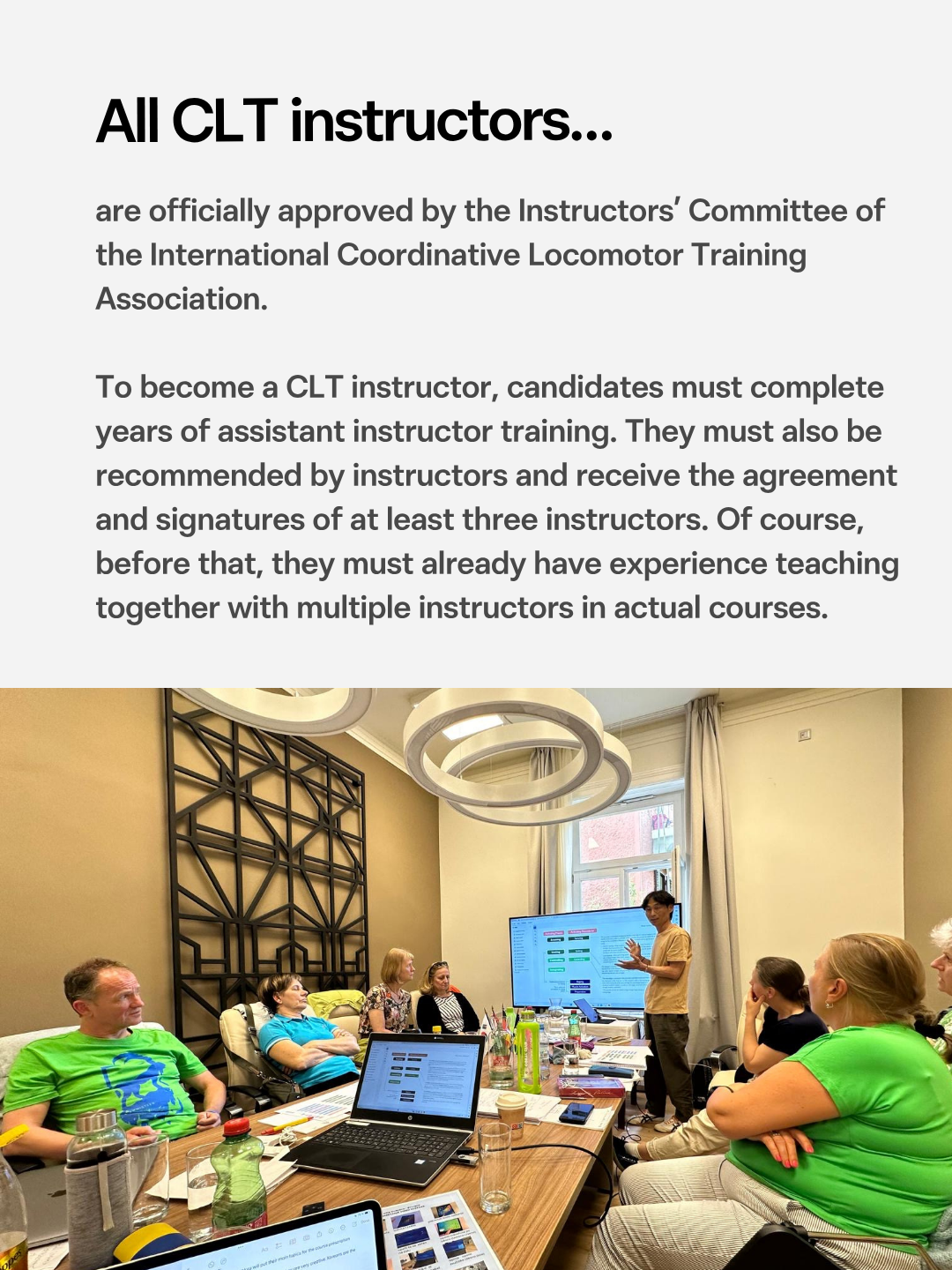
A person does not become a CLT instructor simply because they have studied CLT for a long time. All official CLT instructors are approved by the Instructors’ Committee of the International Coordinative Locomotor Training Association.
To become a CLT instructor, candidates must go through years of assistant instructor training. They must also be recommended by instructors and receive the agreement and signatures of at least three instructors. Before that, they must already have experience teaching together with multiple instructors in actual CLT courses.
This process is not merely a formal requirement. To become a CLT instructor, one must deeply understand both the CLT concept and its practical applications. CLT is not something that can be taught simply by memorizing and demonstrating movements. One must understand how to observe movement, analyze it, facilitate it, and connect it to functional activities within a meaningful context.
This is why assistant instructors learn CLT by working with various instructors in real teaching situations. Through this process, they experience different teaching styles, educational perspectives, clinical reasoning processes, and practical approaches. In this way, they gradually develop their own understanding of CLT and grow as educators.
What Can CLT Assistants Do?
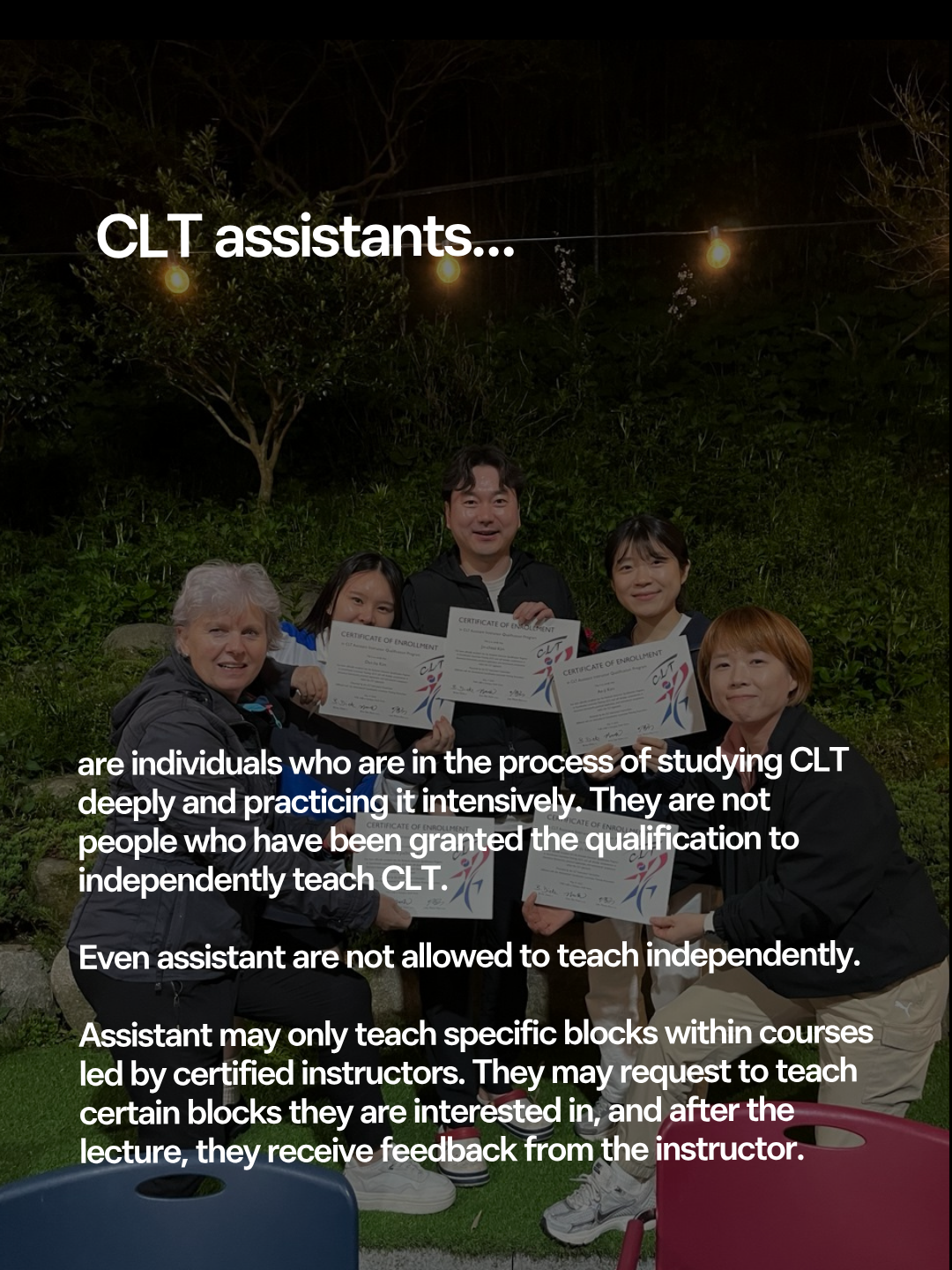
CLT assistants are individuals who are in the process of studying CLT deeply and practicing it intensively. However, assistants are not qualified to teach CLT independently.
An assistant may teach specific blocks only within a course led by a certified instructor. For example, an assistant may request to teach a certain topic or block they are interested in. After the lecture, they receive feedback from the instructor.
The purpose of this process is not to allow assistants to teach independently. Rather, it is part of their learning and training. Through teaching under supervision, assistants deepen their understanding of CLT and receive feedback on their explanations, demonstrations, and practical guidance. Therefore, even CLT assistants are not allowed to open independent CLT courses or teach CLT without a certified instructor.
What Can CLT Course Participants Do?
People who have completed an official CLT course may be called CLT participants or CLTarians. They have learned CLT through official courses and may apply CLT in their own clinical practice, exercise instruction, or professional field.
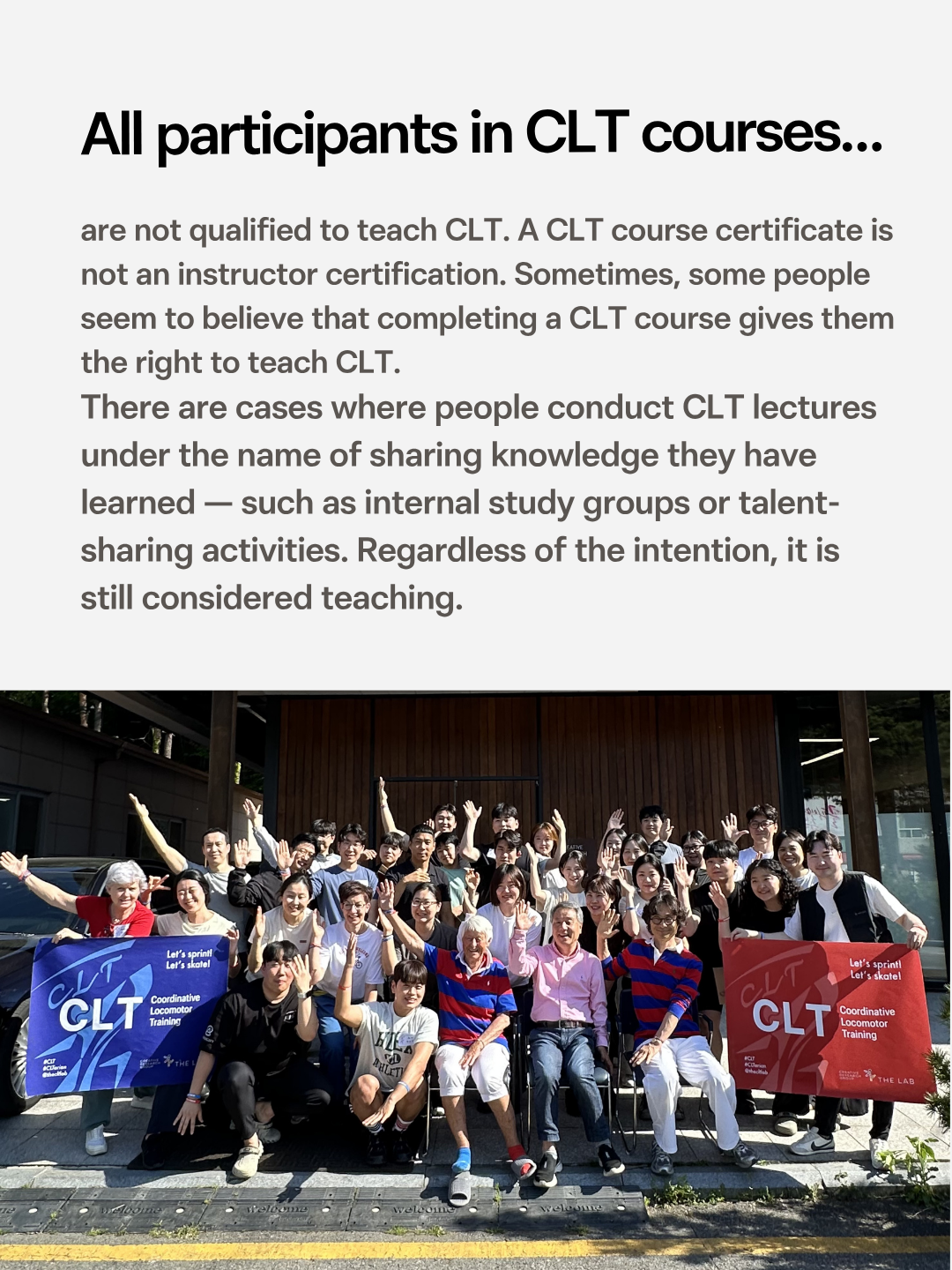
However, completing a CLT course does not mean that a person is qualified to teach CLT. Again, a CLT course certificate is not an instructor certification.
Sometimes people may try to conduct CLT lectures under the name of sharing what they have learned. This may happen in internal study groups, informal seminars, talent-sharing activities, or small educational meetings. Their intention may be good. However, if they explain CLT concepts and procedures to others under the name of CLT, it is still considered teaching.
Even if someone says, “I am not teaching. I am only sharing,” the audience may still understand it as CLT education. Therefore, the boundary between personal sharing and teaching CLT must be handled carefully.
The Role of CLTarians
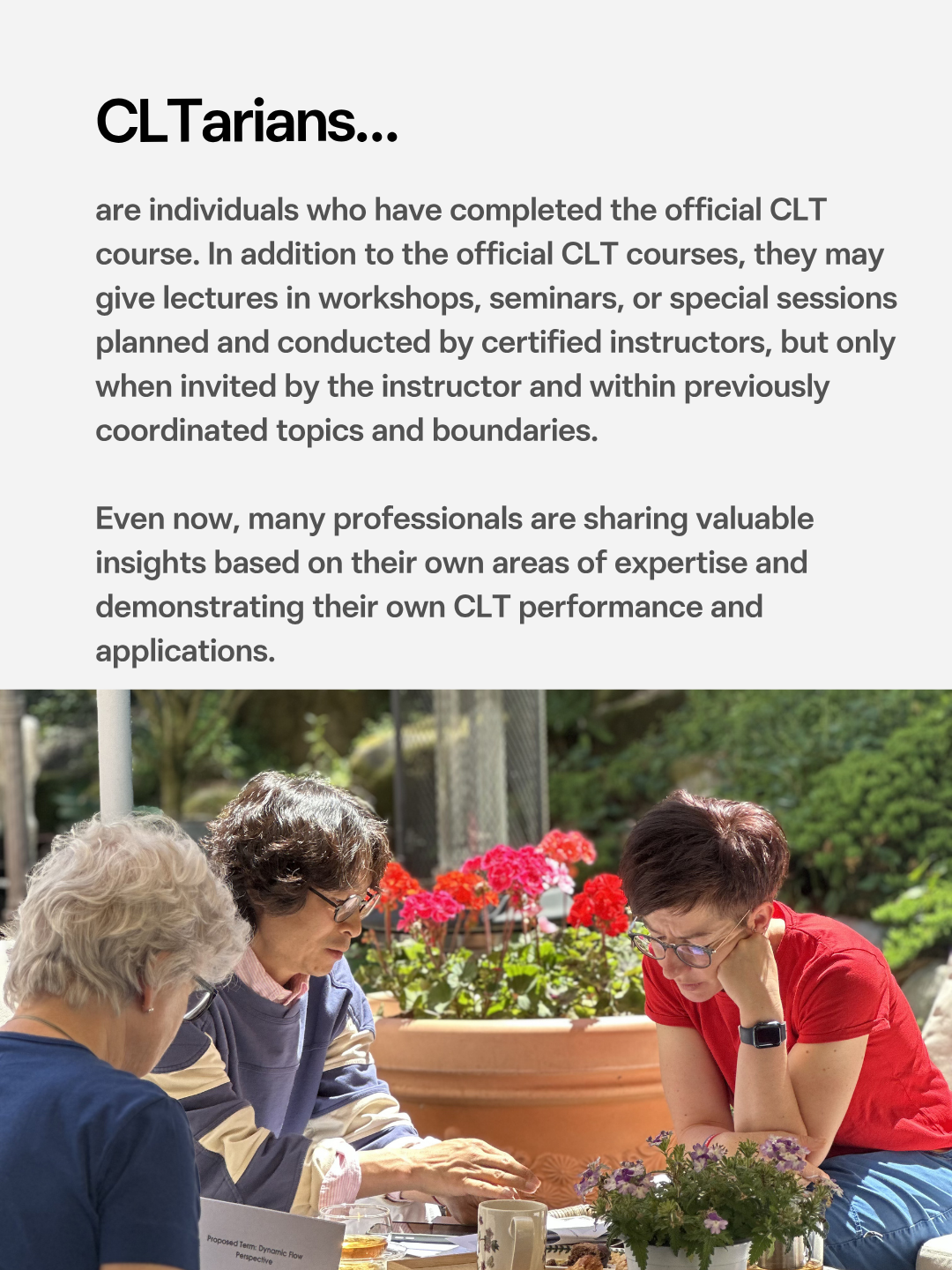
CLTarians are individuals who have completed official CLT courses. CLTarians may apply CLT within their own professional fields. At the request of certified instructors, they may also share meaningful insights based on their clinical experience, movement practice, and professional background.
When CLTarians are involved in CLT-related lectures, demonstrations, workshops, seminars, or special sessions, this must always take place with permission from and under the supervision of a certified CLT instructor. In other words, they may participate only when invited by the instructor, and they may contribute only within previously coordinated topics, roles, and boundaries.
Even now, many professionals are sharing meaningful insights based on their own expertise and demonstrating their own CLT performance and applications in official CLT courses and workshops when requested. This is highly valuable. CLT can become richer through the experiences of many clinicians, therapists, and movement professionals.
However, even in these cases, such activities must be understood as contributions made with permission from and under the supervision of a certified CLT instructor. They must not be understood as independent CLT teaching. This should not be confused with independent CLT teaching. Clear boundaries are necessary.
“Can I Teach CLT?”
“Can I teach CLT?”
The answer to this question is simple.
“Am I a certified CLT instructor?”
If the answer is yes, then one is qualified to teach CLT. If the answer is no, then one is not qualified to teach CLT independently.
A thoughtful person may also ask one more question:
“Why am I trying to teach it?”
This question is not only about qualification. It is also about attitude and responsibility. Teaching CLT does not simply mean showing a few movements. It means representing the CLT concept and delivering it to others. Therefore, the responsibility is not light.
Clarity Is a Matter of Respect
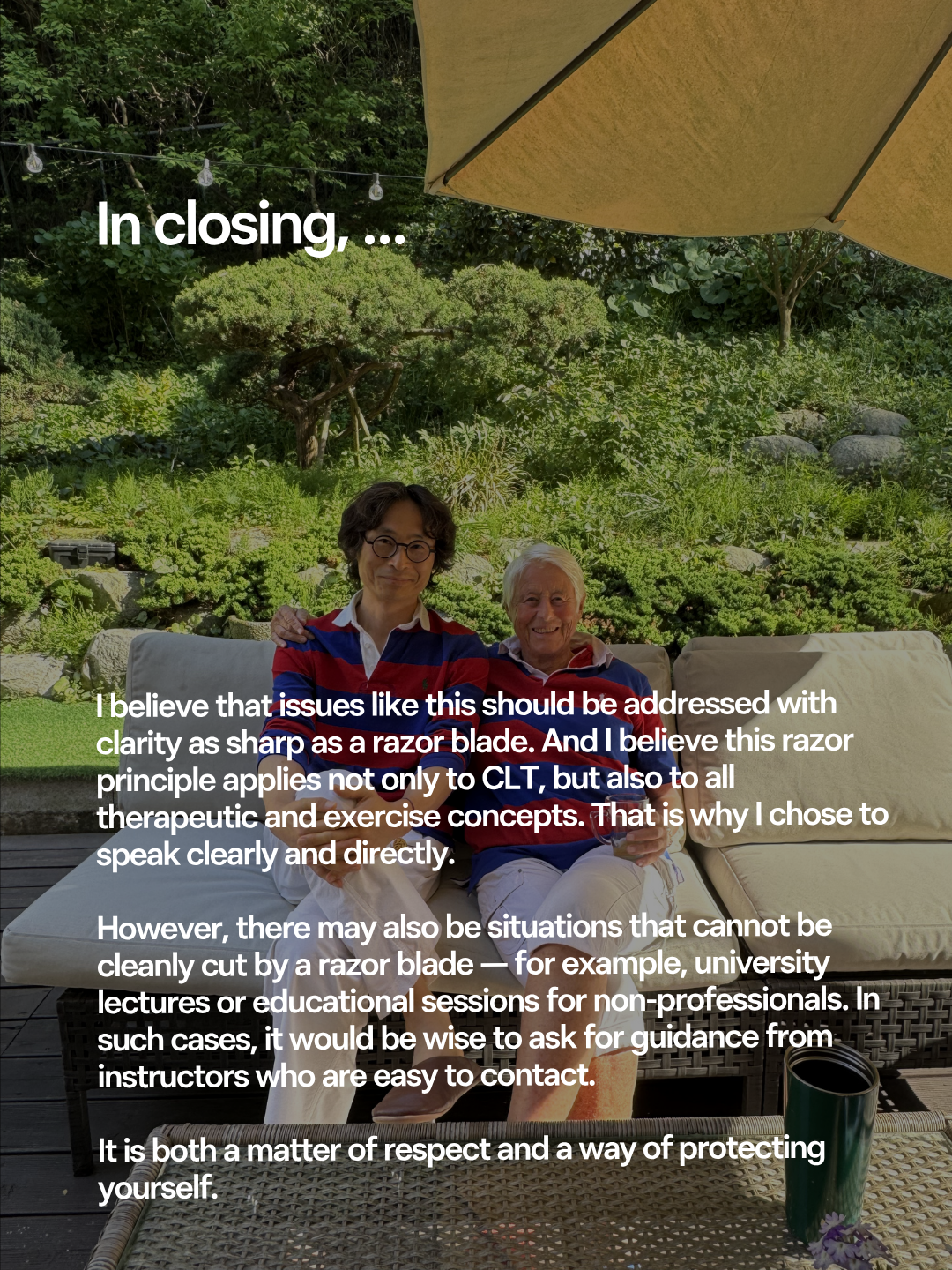
This issue should be addressed with clarity. Sometimes, we need a principle that is as sharp as a razor blade. This applies not only to CLT, but also to many therapeutic and exercise concepts. Learning a concept and being officially qualified to teach that concept are not the same thing. Of course, not every situation can be cut cleanly with a razor blade. There may be situations such as university lectures, educational sessions for non-professionals, or introductory lectures for the general public. In such cases, it would be wise to ask for guidance from a CLT instructor who is easy to contact.
This is both a matter of respect and a way of protecting yourself. It is good that more people are learning and applying CLT. It is meaningful when more professionals use CLT in their clinical practice, exercise instruction, and educational activities. It is also valuable when they share their own experiences and insights. However, officially teaching CLT requires a separate qualification and responsibility.
The principle is clear.
Only certified CLT instructors are qualified to teach CLT independently. This principle is not meant to restrict CLT. Rather, it is a minimum standard for protecting the quality of CLT education, protecting learners, and protecting those who wish to share CLT with others.


끝.
'As a fysiotherapist > CLT' 카테고리의 다른 글
| CLT 강의 자격: 내가 CLT 강의를 해도 될까? (0) | 2026.06.09 |
|---|---|
| 움직임 시스템 개념, CLTarian 프로파간다 (0) | 2026.06.09 |
| CLT 유사품에 주의하세요. #짝퉁CLT (0) | 2020.11.20 |
| ❤️2020 CLT A/B 코스 공지💙 (0) | 2019.12.12 |
| #Gestalt #Movement #Walking [7] (7) | 2017.12.26 |